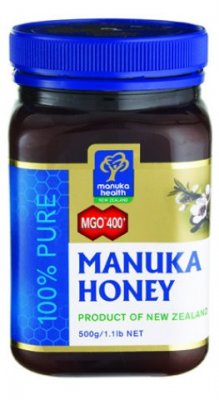
Unique MGO™ Manuka Honey is collected from a New Zealand plant called Leptospermum scoparium. For quite some time the unique manuka honey anti-bacterial activity was known and measured by a general measurement of its biological effect.
What was causing the antibacterial activity remained unknown for almost 15 years. The discovery came from the research group led by Professor Thomas Henle, University of Dresden (Germany). “We unambiguously demonstrate for the first time that Dietary Methylglyoxal is directly responsible for the anti-bacterial activity of manuka honey” (reported Molecular Nutrition and Food Research, January, 2008) So far MGO™ Manuka honey has been the only food in the world found with such a significant Dietary Methylglyoxal content ranging from 20mg/kg to over 800mg/kg. In contrast all other honeys worldwide tested have ranged between 1 to 10 mg/kg, other foods range from 0 to 50mg/kg with coffee and cocoa being the highest. Product | Methylglyoxal, mg/kg |
|---|
Manuka Honey | 20-800+ | Other Honeys | 0-10 | Other Foods | 0-50 |
The Precise Standard for Unique Reliable Activity of MGO™ Manuka Honey Manuka Health has introduced a new brand - MGO™ Manuka Honey and measures methylglyoxal content based on standards developed by University of Dresden. For example, MGO™400 Manuka Honey is certified to contain at least 400mg/kg of dietary methylglyoxal, the minimum required for health benefits is 100mg/kg. Table 1.
The Correlation Between Methylglyoxal Content And The Old Measurement Of The Antibacterial Activity In Manuka Honey Identified by The University of Dresden Product | Methylglyoxal, mg/kg | Old System |
|---|
MGO™100 Manuka | 100mg/kg | 10+ | MGO™250 Manuka | 250mg/kg | 16+ | MGO™400 Manuka | 400mg/kg | 20+ | MGO™550 Manuka | 550mg/kg | 25+ |
|